Skip to content

A website, taken apart. Then built properly.

The Rye Room is a bakery on Stroud High Street. Freya’s sourdough sells out by eleven, yet anyone new to town cannot find it online. Here is her website in six layers, each with one job, and how we build every one of them.
www.terapixel.co.uk/demos/the-rye-room
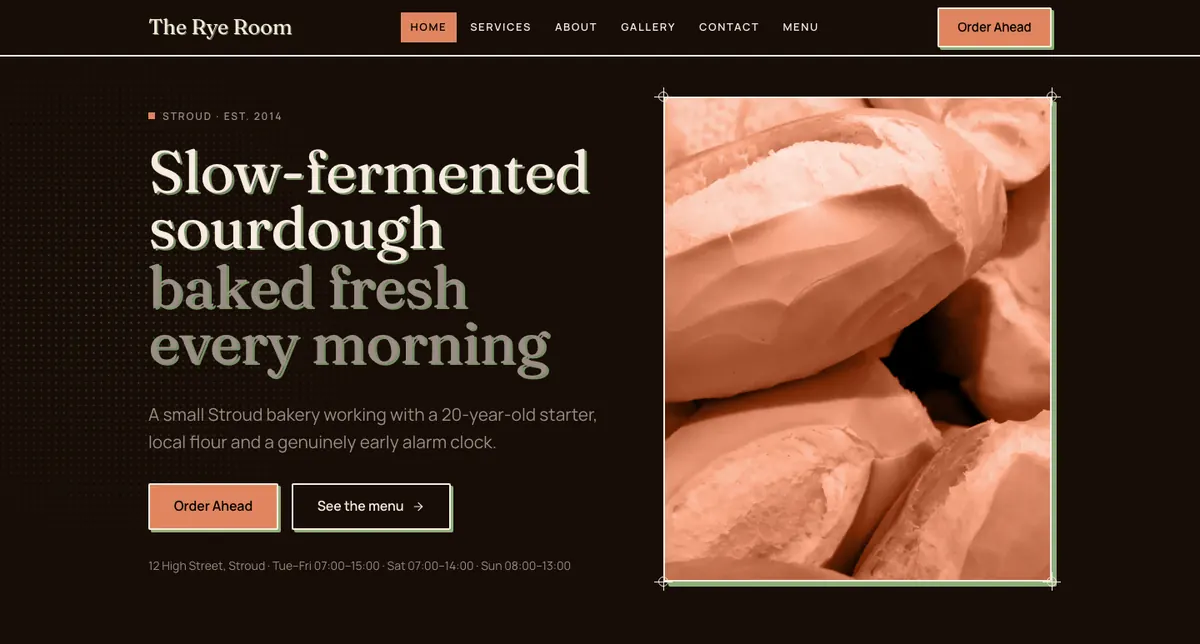
  1. The top of The Rye Room home page: the menu bar, the headline about slow-fermented sourdough, an Order Ahead button and a photograph of bread.
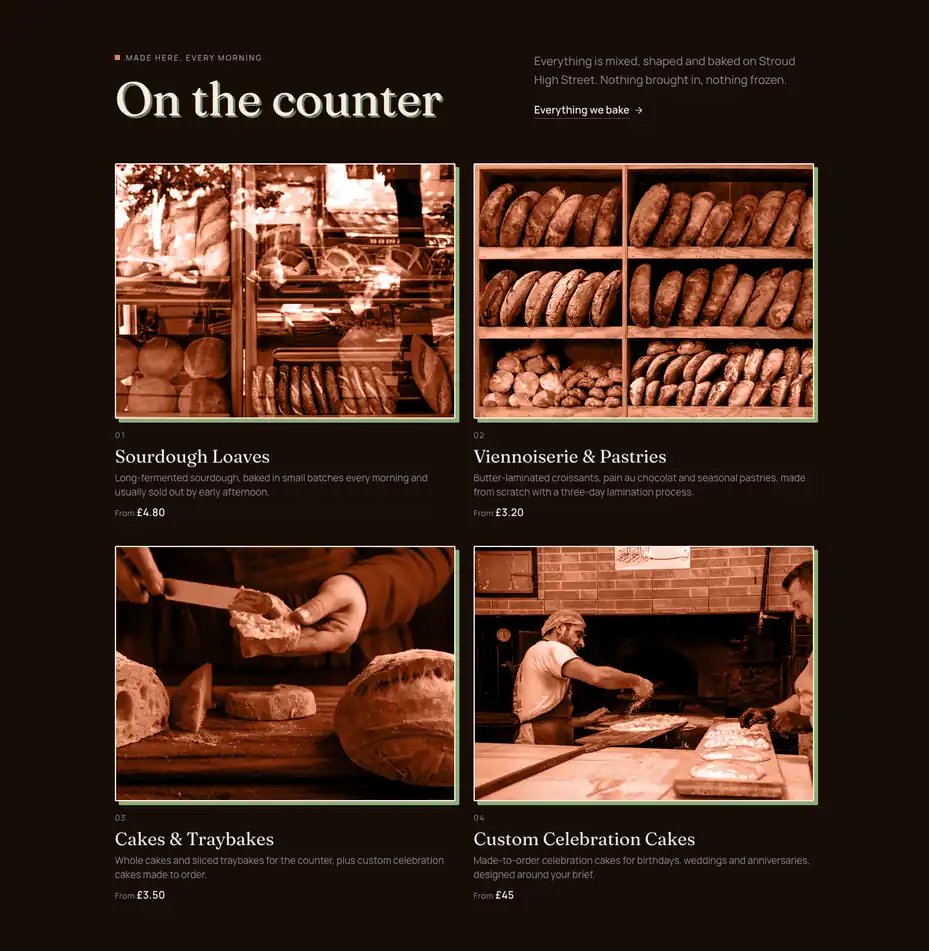
  2. The Rye Room services section: four items on the counter, sourdough loaves, pastries, cakes and celebration cakes, each with a photograph and a from price.
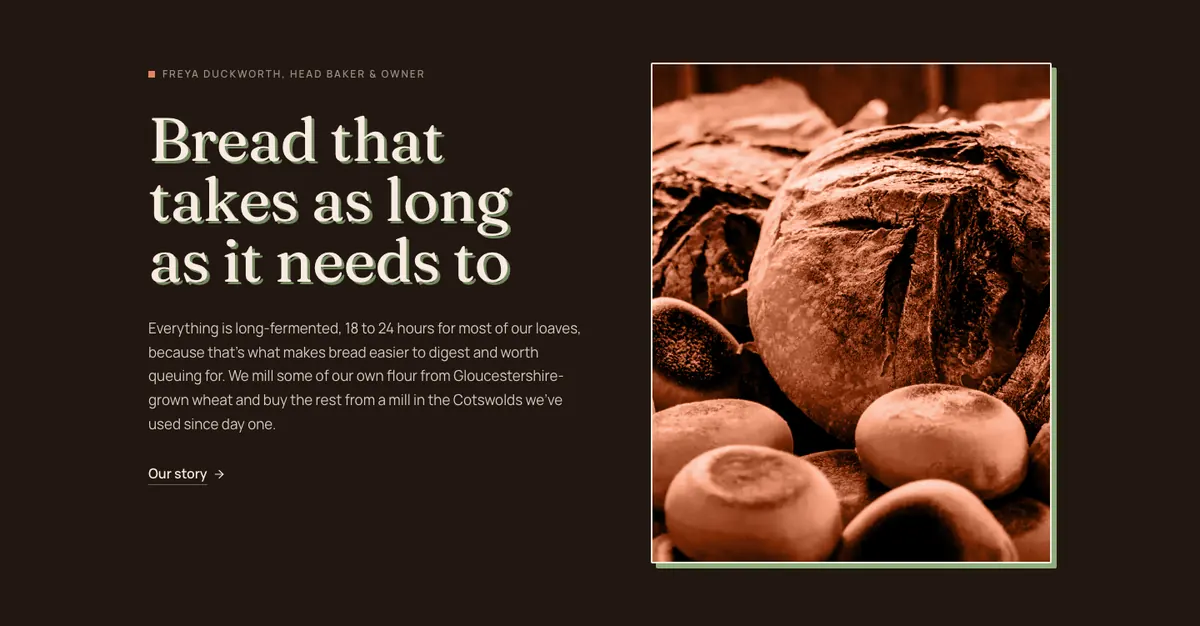
  3. The Rye Room story section: a headline about bread that takes as long as it needs to, a paragraph about long fermentation and a photograph of a round loaf.
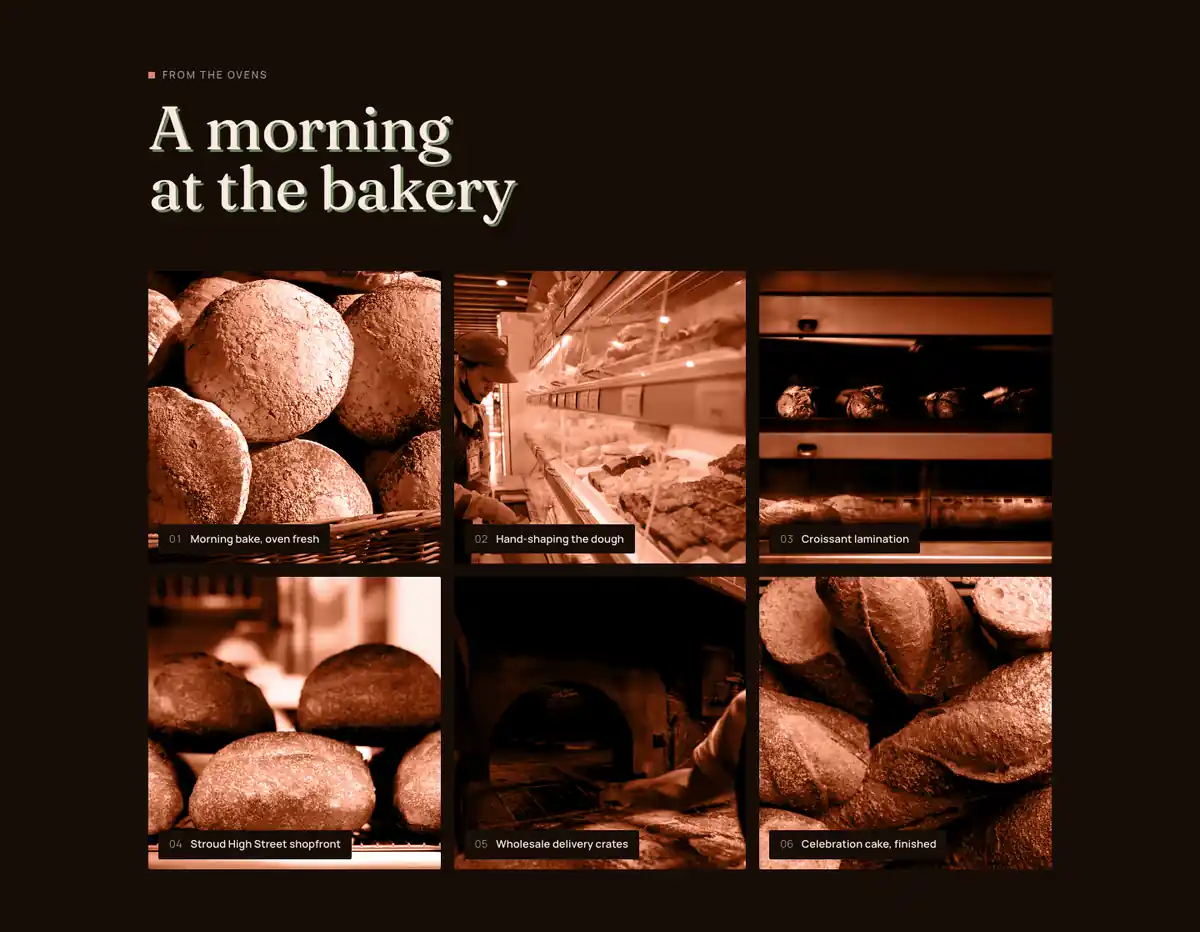
  4. The Rye Room gallery: six captioned photographs of loaves, the counter, an oven and the shopfront.
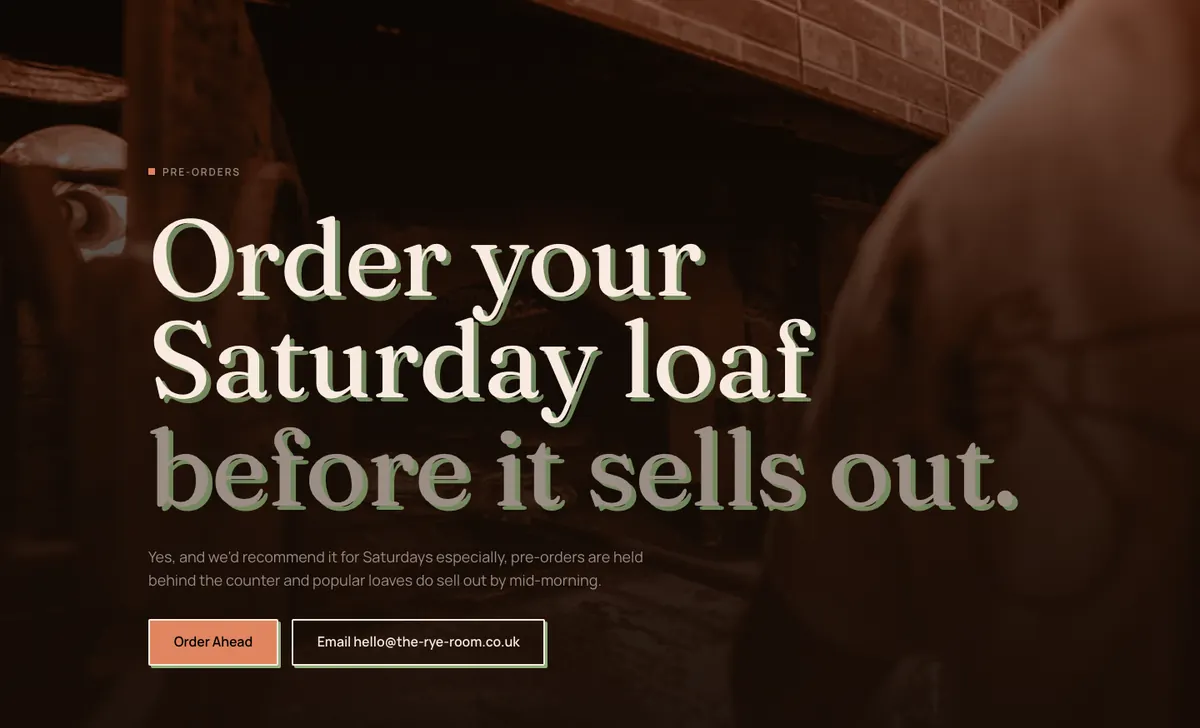
  5. The Rye Room pre-order section: a headline about ordering a Saturday loaf before it sells out, an Order Ahead button and an email button.
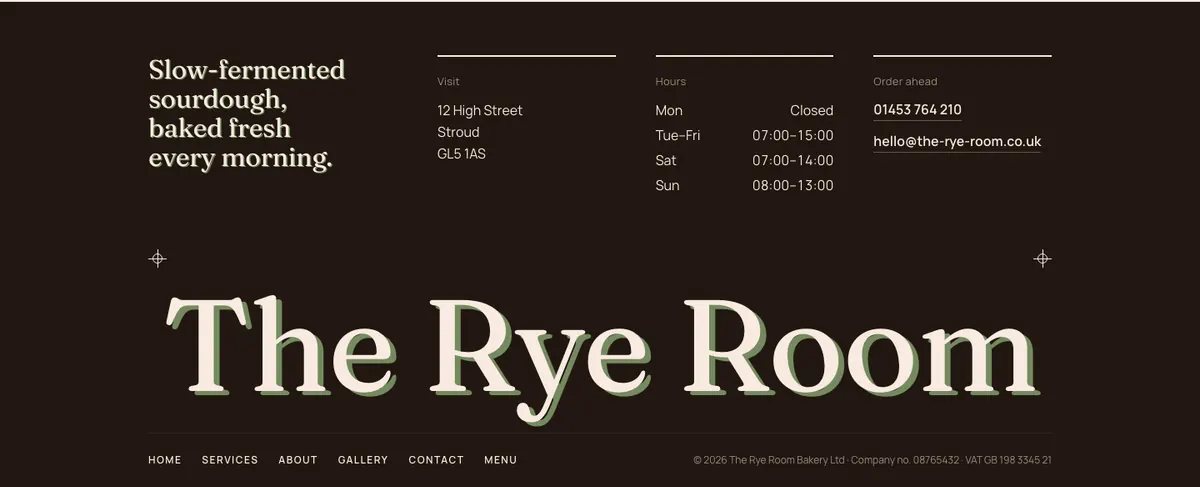
  6. The Rye Room footer: the address on High Street, opening hours, a phone number, an email address and the shop name in large letters.
npm run build
  1. ▲ Next.js 16.0.10 (Turbopack)
  2. Creating an optimized production build ...
  3. ✓ Compiled successfully in 7.5s
  4. Collecting page data using 11 workers ...
  5. ✓ Generating static pages using 11 workers (586/586) in 2.7s
  6. Finalizing page optimization ...
  7. Route (app)
  8. ┌ ○ /
  9. ├ ○ /about
  10. → Freya’s inbox
  1. 01Header and heroThe name, the promise and one clear button, in the first screen of a phone.
  2. 02What is on the counterWhat she sells, with the prices in pounds, so nobody has to ask.
  3. 03The storyWho bakes it and why it takes as long as it takes. People buy from people.
  4. 04The gallerySix captioned photographs of the bake, so the shop feels real before anyone walks in.
  5. 05The pre-order callThe one thing Freya wants more of, asked for plainly, with a button and an email address.
  6. 06The footerAddress, opening hours and a phone number, exactly where people look for them.

Six layers, lifted apart. Each one has a single job. The Rye Room is an illustrative demo business. Its words, prices and photographs are invented for the demo.

The Rye Room home page taken apart into six layers

Section 1: The brief

One form. Then a plan of six pages.

Freya fills in one short form between the morning bake and opening the door: what she sells, who buys it, what she wants more of. That is the whole brief. No sales call, no slide deck.

A person reads it the same day and sends back a page plan and a price in pounds, before anything is built. This is the plan for The Rye Room.

  1. Home

    /

  2. Services

    /services

  3. About

    /about

  4. Gallery

    /gallery

  5. Contact

    /contact

  6. Menu

    /menu

Five pages every site has, and a sixth chosen for what Freya wants more of: a menu with a pre-order form.

Freya’s brief

What do you sell?
Sourdough, rye and pastries, baked every morning on the High Street.
Who buys from you?
Regulars who queue on a Saturday, and people new to Stroud who have not found us yet.
What do you want more of?
Pre-orders, so nobody makes the walk and finds the Saturday loaves already gone.

Section 2: The design

Drawn for a phone in a queue. Then for the big screen.

Most people will meet The Rye Room on a phone, walking up the High Street or waiting at the counter, so every page is drawn for a small screen first. The first draft comes quickly because we start from a working plan, not a blank page, and a designer finishes it by hand.

Freya sees each draft before she pays for the build, and we keep changing it until it feels like the shop.

  1. 01

    Phone first

  2. 02

    Then the big screen

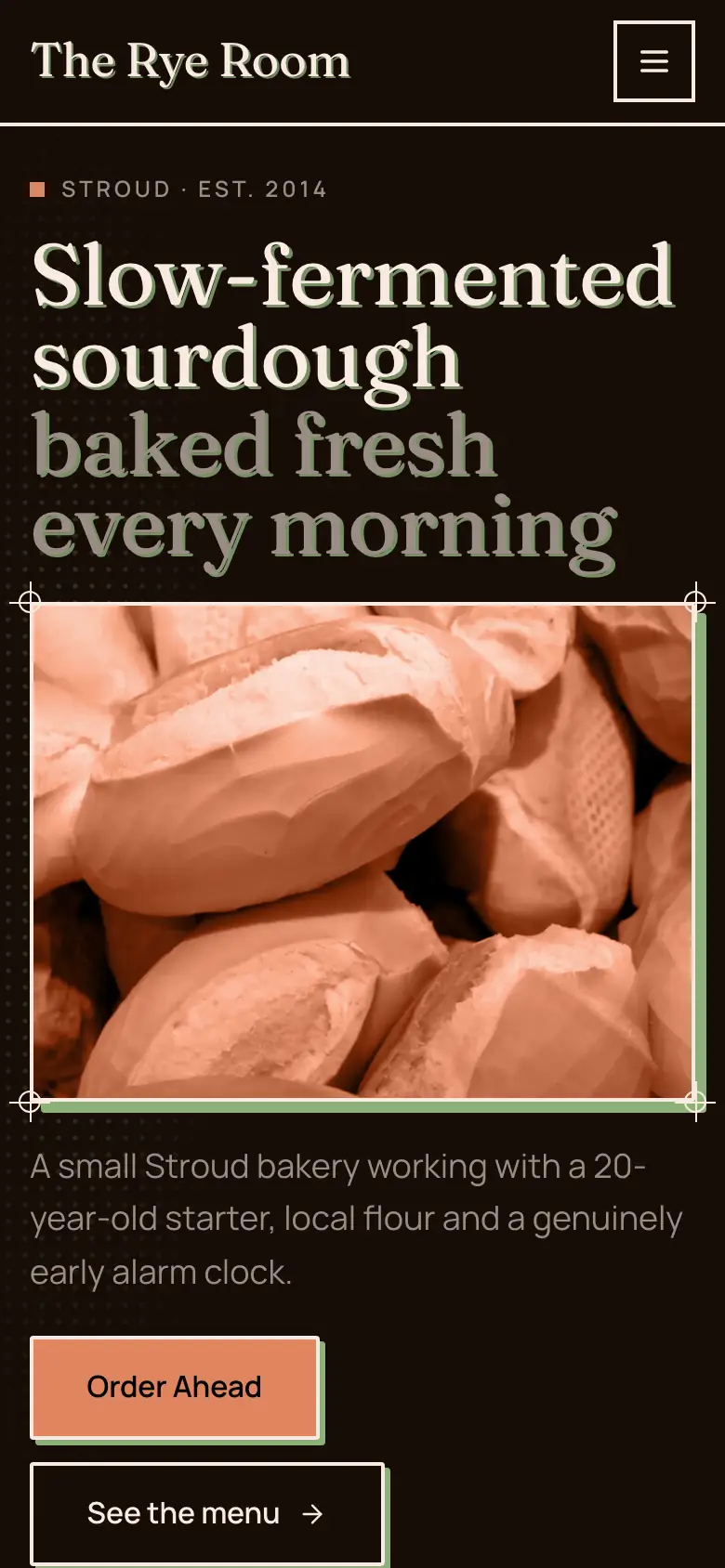
The Rye Room home page on a phone: the header, the headline, two buttons and the first photograph in one column.
www.terapixel.co.uk/demos/the-rye-room
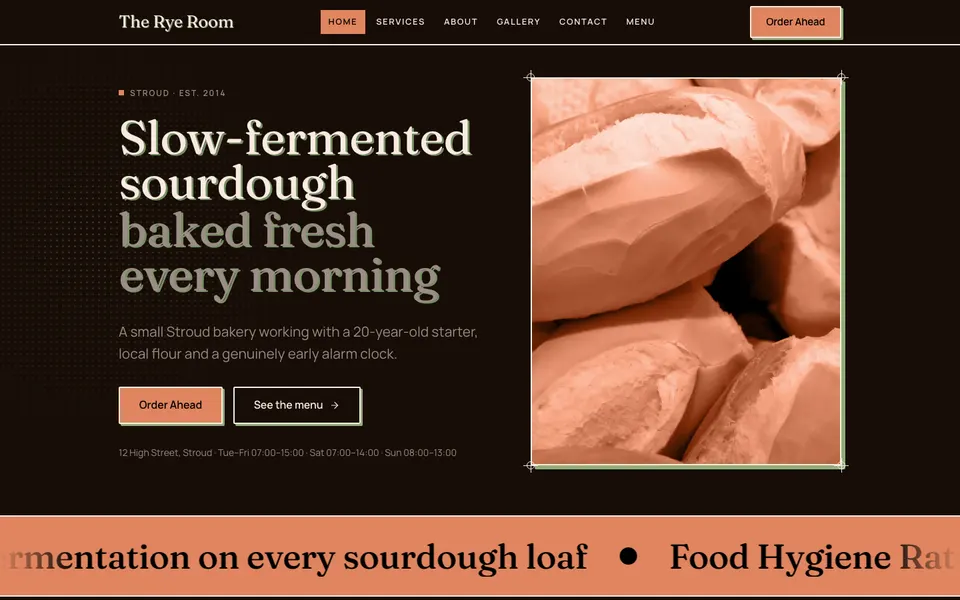
The Rye Room home page on a laptop: the headline on the left and a tall photograph of bread on the right.
Two screens of the same page. The draft is drawn on the phone first, then widened.

Section 3: The build

Built to outlast the oven. Next.js, React and Postgres.

No page builder and no theme. We write the site by hand in Next.js and React, so it loads quickly on a phone with one bar of signal and is still easy to change in five years.

The menu, the opening hours and the pre-order form are real parts of the site, not plug-ins.

  1. The top of The Rye Room home page: the menu bar, the headline about slow-fermented sourdough, an Order Ahead button and a photograph of bread.
  2. The Rye Room services section: four items on the counter, sourdough loaves, pastries, cakes and celebration cakes, each with a photograph and a from price.
  3. The Rye Room story section: a headline about bread that takes as long as it needs to, a paragraph about long fermentation and a photograph of a round loaf.
  4. The Rye Room gallery: six captioned photographs of loaves, the counter, an oven and the shopfront.
  5. The Rye Room pre-order section: a headline about ordering a Saturday loaf before it sells out, an Order Ahead button and an email button.
  6. The Rye Room footer: the address on High Street, opening hours, a phone number, an email address and the shop name in large letters.
Built layer by layer, from the bottom up.

Built with

Framework
Next.js 16
Interface
React 19
Language
TypeScript 5
Styling
Tailwind CSS 4
Data
Drizzle ORM on PostgreSQL
Hosting
Our own servers
Page builder
NoneEvery page is written by hand.
See real software we have built

Weight of the home page

1,534

Everything the page loads, KB

Median of every demo (82): 1,408 KB

974

Scripts, KB

Median of every demo (82): 974 KB

287

Images, KB

Median of every demo (82): 139 KB

62 requestsmain content painted after 1.6 slab

On a simulated slow phone connection in our lab, the demo paints its main content in under two seconds, with photographs the smaller part of the weight, a lab figure and not a promise for every network.

Lab measurement, 2026-10-24, simulated slow phone connection

Section 4: Launch day

Live on a Tuesday. Taking orders by Friday.

We register the domain, point it at our own servers, switch on the certificate and the pre-order form, and send Freya the link.

By the end of the week the first Saturday loaves are reserved online, by people who found the bakery the night before.

  1. The domain

    Registered in the bakery’s name.

  2. DNS

    Pointed at our own servers, so the name finds the site.

  3. The certificate

    The padlock, switched on and renewed for her.

  4. Our own servers

    Where the pages and backups live.

  5. The pre-order form

    A customer asks for a Saturday loaf.

  6. Freya’s inbox

    The request arrives, checked and ready.

npm run build
▲ Next.js 16.0.10 (Turbopack) Creating an optimized production build ... ✓ Compiled successfully in 7.5s Collecting page data using 11 workers ... ✓ Generating static pages using 11 workers (586/586) in 2.7s Finalizing page optimization ... Route (app) Revalidate Expire ┌ ○ / 5m 1y ├ ○ /about ├ ○ /contact ├ ● /demos/[slug] │ ├ /demos/halewood-and-sons │ ├ /demos/voltway-electrical │ ├ /demos/marchmont-roofing │ └ [+79 more paths]
The studio’s own last production build, from the real build log.

Section 5: After launch

Kept running. By the people who built it.

Hosting, the domain, backups and the small changes: a new loaf on the menu, a Christmas closing date, a price that moved. One email, to the people who built it.

Ongoing support and maintenance packages for when you want more than that.

Care log

Monday
Bank holiday hours on the home page before the shop opened.
Wednesday
Certificate renewed. Nothing for Freya to do.
Thursday
Last night’s backup kept, as every night.
Saturday
The seeded multigrain added to the pre-order list.

Section 6: What you get

What you get. Everything the page is made of.

INK 01

Design

A plan, then drafts you see before you pay for the build.

  • Page plan
  • Phone-first drafts
  • Your words and photos
  • Changes until it feels right

INK 02

Build

Written by hand, tested on real phones, nothing rented.

  • Next.js and React
  • Forms that reach you
  • Admin area you edit yourself
  • Analytics consent

INK 03

Launch

The domain, the certificate and a checklist run before you go live.

  • Domain
  • Hosting
  • Security certificate
  • Launch checklist

INK 04

Care

Small changes in the first thirty days are part of the project.

  • Backups
  • Security updates
  • Content changes
  • Support and maintenance

Section 7: Questions

Questions about your website.

How long does a website take?

It depends on the size. A single landing page usually takes one to two weeks, a multi-page site three to four weeks, and a web application six to twelve weeks. You see the timeline with your price, before you commit to anything.

What kinds of website do you build?

Landing pages for a launch or a campaign, multi-page sites for an established business (home, services, about, gallery, blog, contact), online shops with a basket, checkout and payments, and web applications with accounts, a database and an admin area. The Rye Room is a multi-page site with a pre-order form.

What do you build them with?

Next.js, React, TypeScript, Tailwind CSS and Postgres, written by hand. Your site is fast, secure and easy to change later. No page builder and no theme.

Will it work on phones?

Yes. Every page is drawn for a phone first and a big screen second, and checked on both before launch. Most people find a small business on their phone, so that is where we start.

Do you look after hosting and the domain?

Yes. We register the domain, host the site on our own infrastructure and look after the security certificate, so there is one place to ask. If you already have a host you are happy with, we can work with them instead.

Can I change the words and photos myself?

Yes. Where you need it, the site comes with an admin area you can edit yourself: text, photos, opening hours, menus and prices, with no code. We show you how it works when we hand the site over.

Will people find it on Google?

Every site is built to be found: a clear page structure, proper titles and descriptions, fast loading on a phone and structured data that search engines can read. For keyword research and ongoing work, see our SEO service.

Do you offer maintenance after launch?

Yes. Ongoing support and maintenance packages cover security updates, backups, content changes, performance checks and help when you need it. Tell us what you need and we will price it in pounds.

What if I need changes after launch?

Small adjustments in the first 30 days after launch are part of the project. After that, changes come under a maintenance package or are priced by the hour, whichever suits you.

A bakery, a workshop, a shop. Bring yours into focus.

Tell us about your business in one short form, or start from the demo nearest yours and we shape it to fit.

Scattered squares travelling into place to form the Terapixel mark