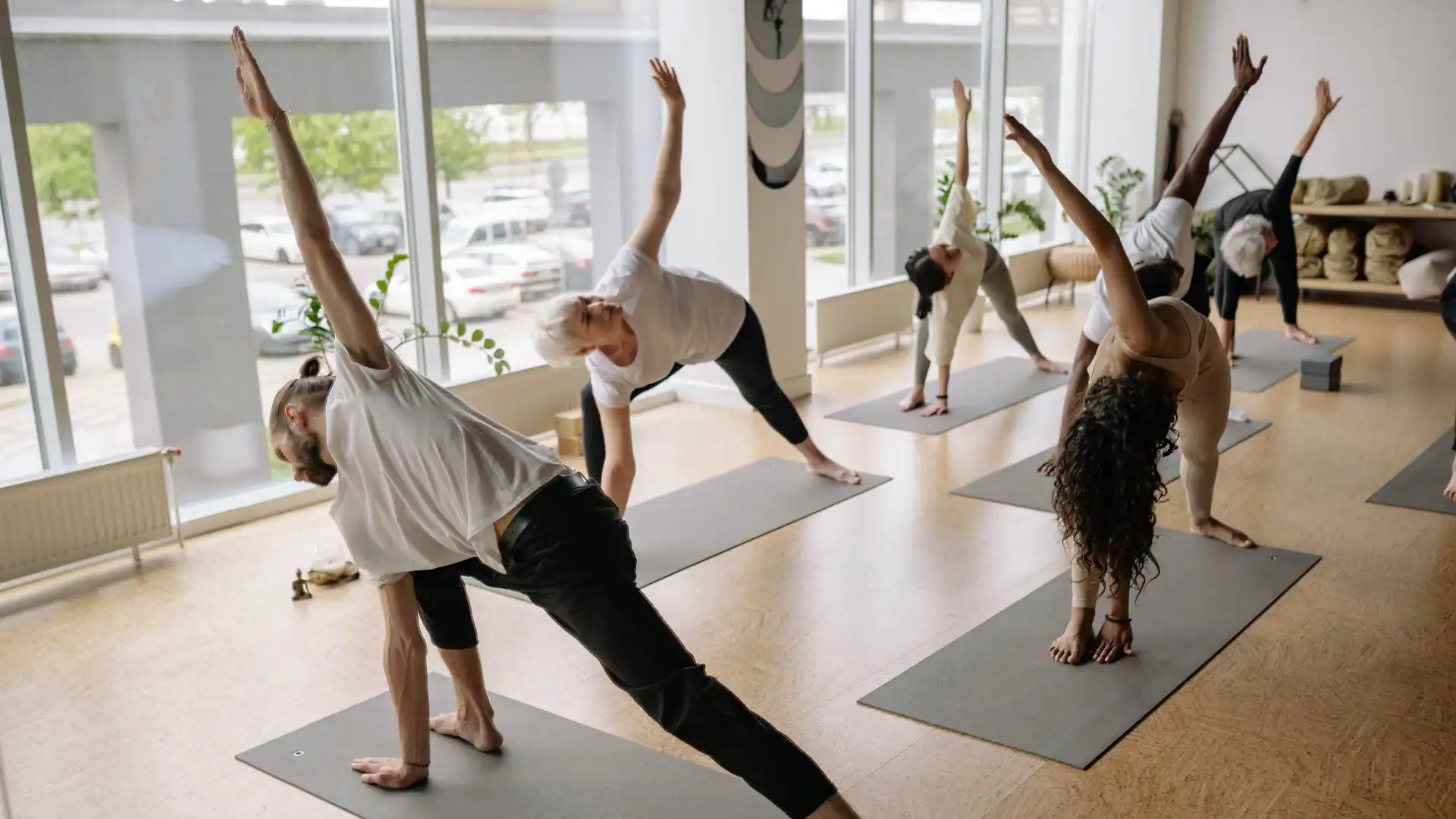
 0:15
TP-V01
The room before class
Slow pan along the windows. No music, just the room.
Every new student arrives with the same few questions: what to wear, where to park, whether it is all right to be stiff. Answer each one properly, in your own voice, and the website does the welcoming before anyone walks through the door.
What should I bring to my first class?
Not much. Wear something you can move in and come as you are. We have spare mats, blocks and blankets, so there is nothing to buy before you try a class.
Bring a bottle of water, and a layer to keep on at the end, when the room is quiet and you cool down quickly. Leave your phone in your bag. First-timers are asked to arrive ten minutes early, so we can talk through anything we should know before we begin.
Leave the rest at the door: the worry about being stiff, or not knowing the names of the poses. Everyone in the room was new once. Mairead will find you a spot near the front, where you can see, or near the back, if you would rather watch first.
Draft130 wordsRead time 1 min
The room before class0:15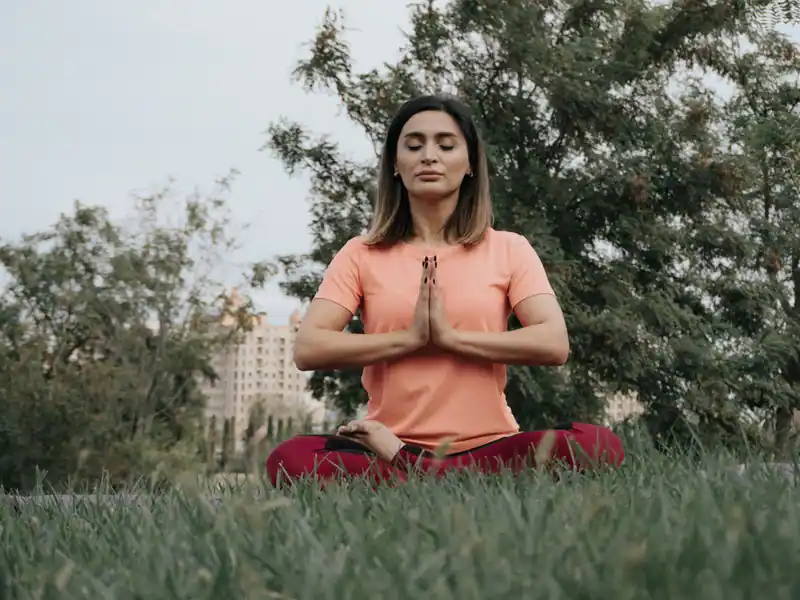 A minute of breathing0:20
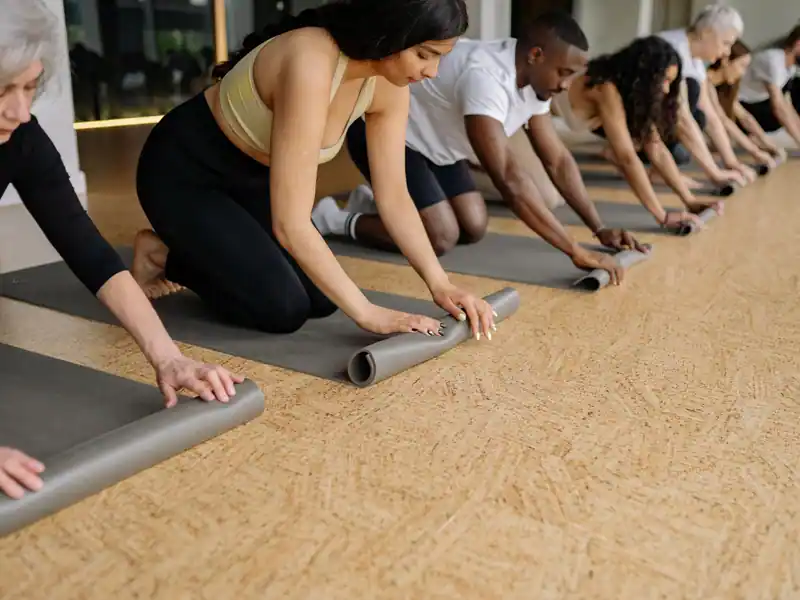 Rolling your mat0:15
The guide goes live on the website.
MondayMonth one, Week 1: Article, Social
An article being written in an editor, with a word count and read time, beside a shot list for a short studio video and a card showing the finished guide published and promoted.
Section 1: The words
We start with the questions: the ones in your inbox, the ones asked at the end of a class, the ones people type into a search box before they ever find you. Each question becomes a piece, written the way you would say it across the counter, with the graphics to sit beside it.
Every piece comes to you before it goes anywhere. You change what does not sound like you, and we revise it until it does.
What should I bring to my first class?
Draft130 wordsRead time 1 min
Try it: the draft is editable, and the count follows what you type.
Still Point Yoga, Totnes, is an illustrative demo business. The articles, storyboard and calendar on this page are built illustrations, not real publications.
Section 2: The video
Some questions are easier to answer by showing the room. A short video of the studio before a class, a minute of breathing on the grass, how to roll your mat at the end.
A phone is often enough. When you want more, we plan it, script it if it needs a script, shoot it, and cut it to suit the page, the newsletter and the feed.
0:15TP-V01
Slow pan along the windows. No music, just the room.
0:20TP-V02
On the grass outside, one student, eyes closed. Hold the shot.
0:15TP-V03
Low angle along the row. Voiceover: how to roll it at the end.
Still Point Yoga
Totnes. Come and try a class.TP-V04
The class times and the booking link, on a plain ground.
Frames from Still Point Yoga, an illustrative demo business.
Section 3: Published
A piece nobody reads is only a draft. Once you are happy with it, we publish it on your site, send it to your newsletter, cut it into posts for the feed and link them all back to each other.
Then we look at what people read and what they asked next. That decides what we write the following month.
27
One quarter
pieces in one quarter, across four kinds.
| Week | Article | Newsletter | Video | Social |
|---|---|---|---|---|
| Week 1 | Article | Social | ||
| Week 2 | Newsletter | Social | ||
| Week 3 | Article | Video | Social | |
| Week 4 | Newsletter | Social |
| Week | Article | Newsletter | Video | Social |
|---|---|---|---|---|
| Week 1 | Article | Social | ||
| Week 2 | Newsletter | Social | ||
| Week 3 | Video | Social | ||
| Week 4 | Article | Newsletter | Social |
| Week | Article | Newsletter | Video | Social |
|---|---|---|---|---|
| Week 1 | Article | Social | ||
| Week 2 | Newsletter | Video | Social | |
| Week 3 | Article | Social | ||
| Week 4 | Newsletter | Social |
Illustrative. A real quarter is planned with you around the studio year.
A week with the first-class guide
Monday
The guide goes live on the website.
Tuesday
A short version goes out in the newsletter, with a link to the guide.
Thursday
A video of the studio goes on Instagram, pointing back to the guide.
Friday
Three new questions arrive in the inbox. They become next month’s pieces.
Section 4: What you get
INK 01
Guides, pages, newsletters and copy, written from the questions your customers ask.
INK 02
The pictures and diagrams that sit beside each piece.
INK 03
Planned, scripted if it needs it, shot and cut for the page, the newsletter and the feed.
INK 04
A plan from your questions, then published, promoted and learned from.
Section 5: Questions
Four to eight pieces a month is a good rhythm while a site is finding its feet, and fewer is fine once the main questions are answered. We fit it to your goals and your budget.
Yes. Writing it is only half the work. We publish it on your site and help promote it through your newsletter, your social pages and wherever else your customers read.
That is the first job. We read what you have already written, along with any brand guidelines, and write so that it sounds like you. You see everything before it goes out.
We write for many kinds of business. For anything technical we talk to your own expert so it is accurate, and you check it before it goes live.
Yes. Every written piece starts from the question people actually search, with clear headings, a proper description and links to the rest of your site. Our SEO service covers the wider work.
A written piece usually takes one to two weeks from brief to first draft. A short video takes two to four weeks, depending on how much planning it needs. We can go faster when there is a date to hit.
Yes. A good article can become a video script, a run of posts, a newsletter or an infographic. Reusing it takes it further for the same effort.
Tell us what to change and we change it, and we keep going until it sounds like you, within our fair usage policy. A piece is only finished when you are happy to put your name to it.
Scattered squares travelling into place to form the Terapixel mark